Infant Feeding Support
Resources
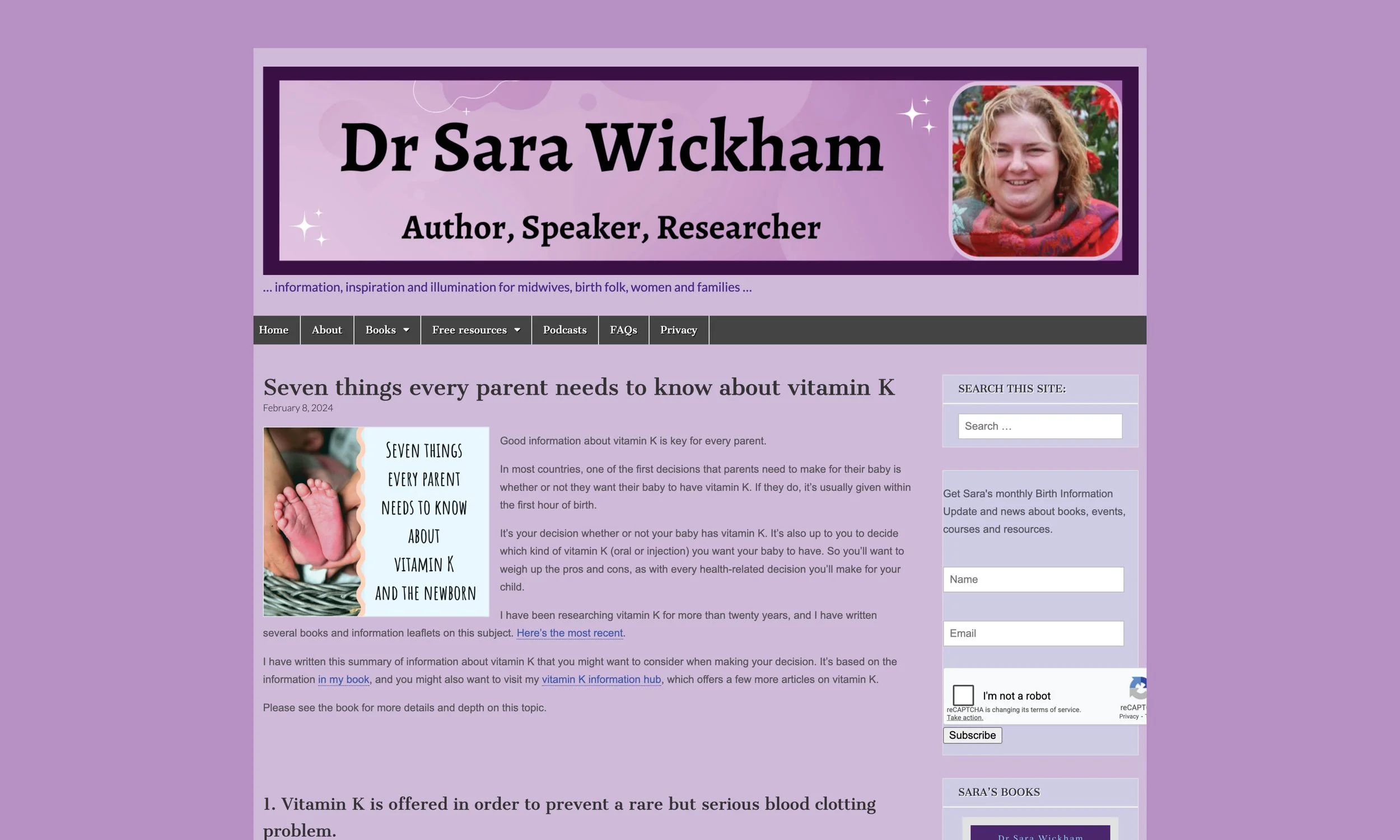
This resource from Dr. Sara Wickham provides evidence-based information on vitamin K for newborns, helping parents understand why it is offered, the risks of vitamin K deficiency bleeding, and the options for administration (injection or oral). It outlines the benefits, safety considerations, and alternatives.
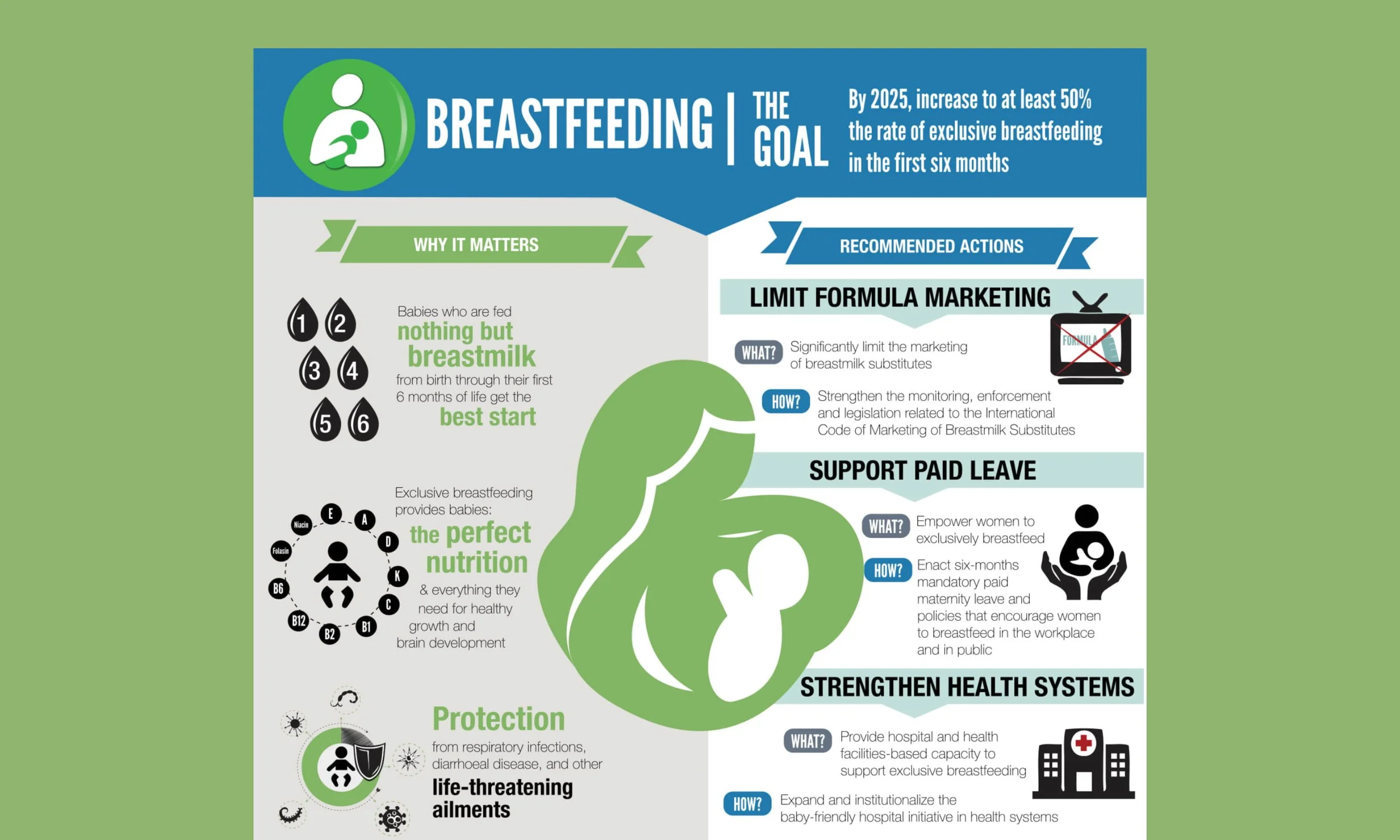
This resource is an infographic summarizing the benefits and importance of breast/chestfeeding.
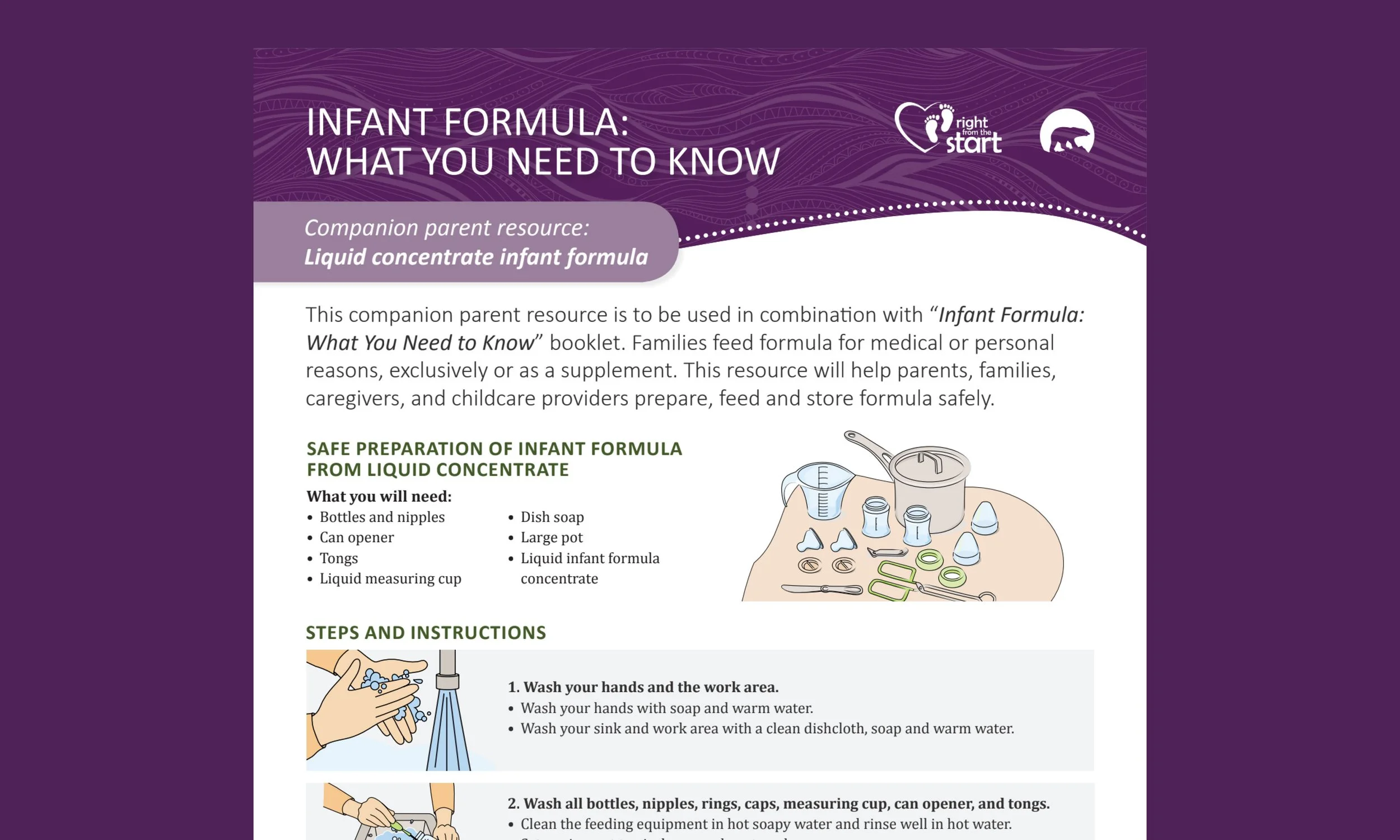
This resource is a companion guide specifically focused on the safe and correct use of liquid concentrate infant formula. It provides step-by-step instructions for preparing bottles using this specific type of formula. The document also covers storage guidelines for both the liquid concentrate before mixing and for the prepared bottles, emphasizing safety precautions.
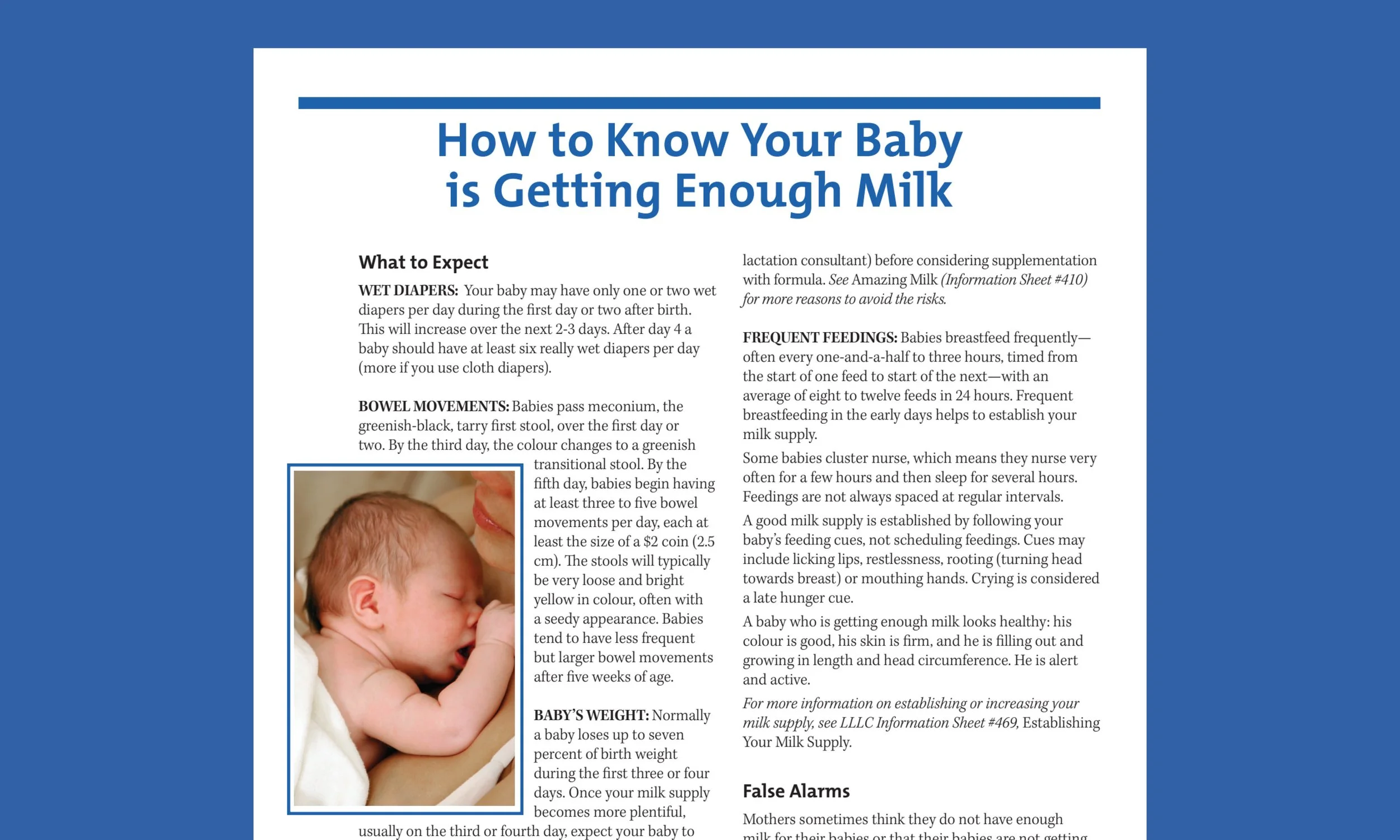
This document is a straightforward guide designed to help parents determine if their baby is receiving enough breast milk. It focuses on observable indicators, listing signs of good milk intake, such as output (wet diapers and bowel movements) and behavioural cues. It also outlines signs that the baby might not be getting enough milk and advises on when to seek professional help.
This document is a comprehensive guide to introducing a baby's first foods.
It provides information on:
When and how to start solids.
Nutritional needs for infants.
Types of foods to offer, including texture progression.
Meal planning and healthy eating tips for babies.
Safety considerations, such as preventing choking and managing allergies.
Food preparation and storage guidelines.
This resource outlines common breast/chestfeeding challenges and practical, non-medical strategies. It covers issues such as sore nipples, engorgement, mastitis, inverted nipples, low milk supply, thrush, blocked ducts, sleepy or colicky babies, and overactive letdown. For each concern, the document provides guidance on techniques, comfort measures, emotional support, and when to refer to a healthcare provider or lactation consultant.
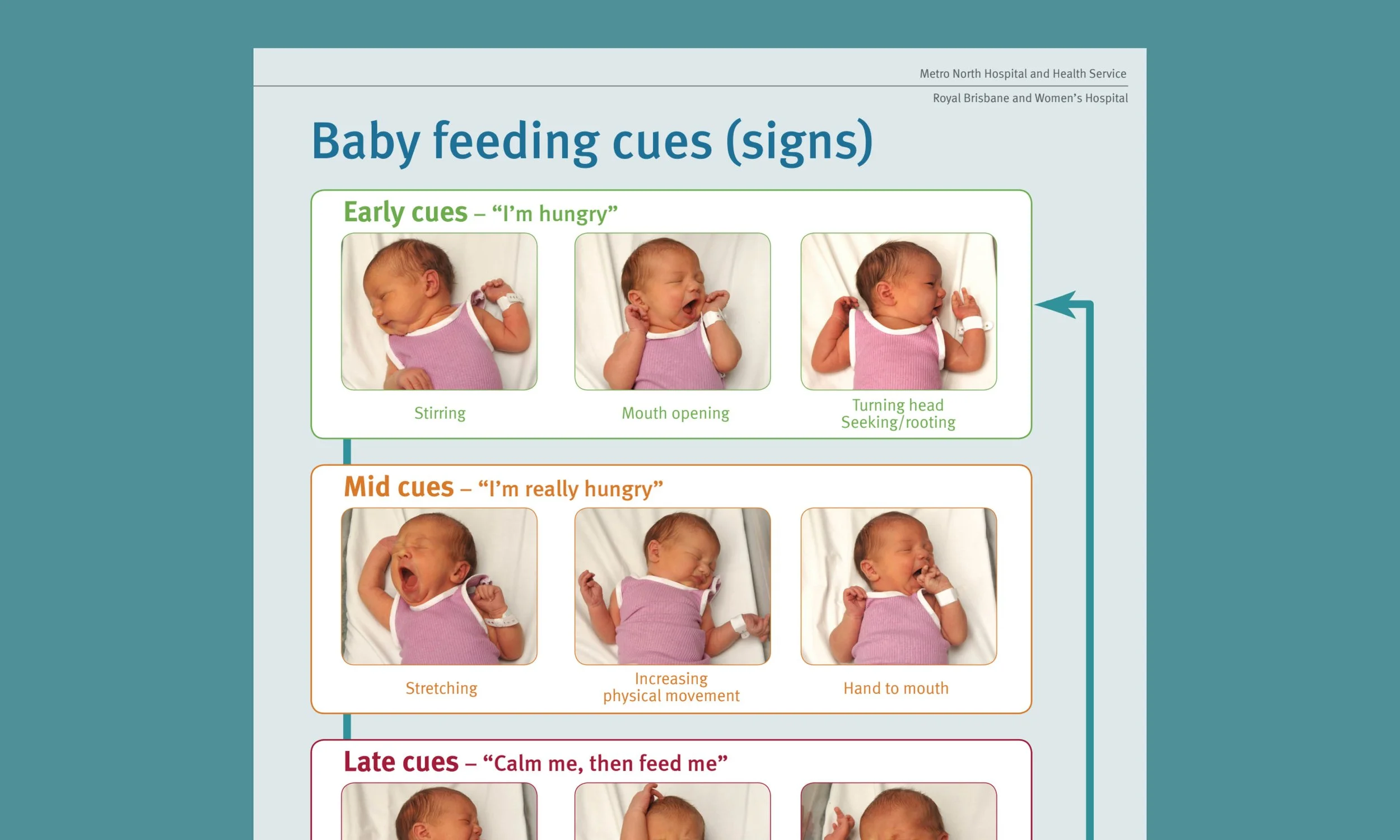
This infographic outlines baby feeding cues, categorized by urgency to help caregivers respond appropriately.
Videos
This video provides a complete guide to colostrum collection. You’ll learn what colostrum is, why it’s important for newborns, and why collecting it can benefit your baby. The video also covers hand expression techniques for safely harvesting colostrum, a skill that’s useful once your milk comes in after birth. You’ll discover when to start collecting, how to do it correctly, and practical tips to make the process easier. A valuable resource for new and expecting parents who want to support their baby’s early nutrition.
This video helps parents and caregivers understand how babies communicate their needs through cues like crying, body language, and sounds. It provides guidance on recognizing these signals and responding appropriately.
This video explains how to tell if a baby is feeding well and what to do if a parent is experiencing low breast‑milk supply. It covers signs of successful feeding and offers guidance on ways to support healthy breastfeeding.
Return to Learning Space
Supporting Your Reproductive Health Journey
The MOON Lodge Program is supported by our parent organization, the Northern Birthwork Collective (NBC).
If you’re looking for in-person programming and services, visit the NBC site to learn more about their offerings.
This video shows early breastfeeding initiation through the journeys of 3 newborns and ways to support the practice with mothers and staff.
BACK TO ALL VIDEOS | BACK TO ALL TOPICS